
Every strategy looks perfect on the map. It's the territory where order goes to die.
That's exactly where I work.200+
PhD researchers coached at MIT & NSF
25+yr
Pattern recognition across research, innovation & GTM
40+
Teams found their footing in the fog
$120M
in revenue generated across GTM roles
"She brought great depth of experience and a remarkable ability to get to the heart of issues and build momentum."
Scott D'Alessandro, Bill & Melinda Gates Foundation
Some problems aren’t solved by more information or a better framework. They’re solved by someone who can sit with you and your team in genuine complexity, help you see what you can’t see from inside it, and restore the clarity and confidence to act.
That’s the work I do best.
I bring thirty years of pattern recognition across research, innovation, GTM and organizational complexity to bear on whatever is actually in front of you. Not a playbook. Not a methodology imposed from outside. A thinking partner who has earned her questions the hard way.
This is the work for founders whose teams have lost momentum. Leaders navigating markets that no longer behave the way the strategy assumed. Organizations where the distance between knowing what to do and actually doing it has become the whole problem.
If that’s where you are, let’s talk.
What People Say
She brought great depth of experience and a remarkable ability to get to the heart of issues and build momentum. Betsy is keenly oriented to solving problems and pursuing high-value opportunities, and is a pleasure to work with.
Scott D’Alessandro — Bill & Melinda Gates Foundation
It’s unusual to find a consultant who has her degree of operating experience. Whether you have a GTM challenge or need general strategic support, she will sidle up alongside you and your team, and bring it. The BetterLesson team and I are better for having had Betsy by our side.
Erin Osborn — COO, BetterLesson
Betsy advised me through a period where we experienced the most substantial growth to date. Her ability to listen, understand the issues, and quickly assess where to be most effective were a tremendous benefit. She breaks through bottlenecks and inspires momentum.
Brian Rahill — CEO, CourseStorm
How I see the world
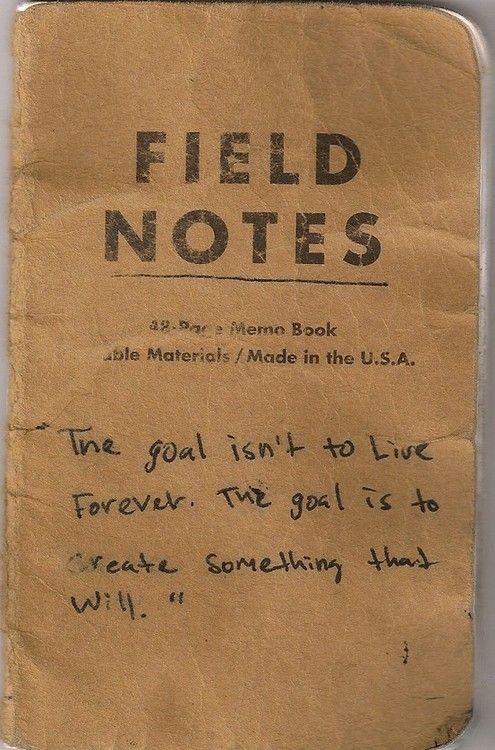
I think in frameworks, field notes, and uncomfortable questions. Cultural anthropology taught me to observe without judgment. Behavioral economics taught me why rational solutions often fail. Revenue Architecture taught me how to build the system underneath the strategy. What ties them together is a stubborn obsession with the distance between a brilliant idea and the world actually changing because of it.
My Experience
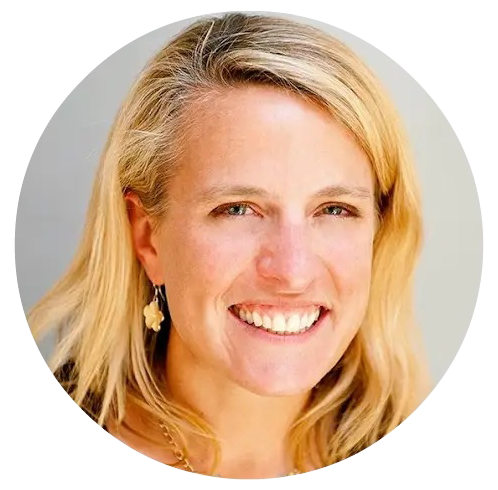
Lead Instructor, MIT / NSF I-Corps — 20+ cohorts of PhD researchers, regional & national programs
Managing Director, Winning by Design — Revenue architecture for SaaS growth teams
NSF Open Source Curriculum — Rewrote the I-Corps curriculum for POSE / open source projects
Founder, PossibilityU — $1.25M raised, Gates Foundation, Pearson, 20K users
Board Chair — HighByte, CourseStorm
At MIT and NSF, I’ve run over twenty cohorts of some of the most brilliant scientists in the country through the I-Corps methodology. The work isn’t about building pitch decks. It’s about unlearning assumptions. Getting out of the building. Discovering whether the problem you’re solving is actually the problem anyone has. Most of the time, the answer surprises people. That’s the point.
At WomenToWomen, from zero to $18M designing the playbook from scratch. As CRO and CMO at multiple SaaS companies driving growth at critical inflection points. At Winning by Design, helping leading technology companies transform their GTM. Thirty years of patterns applied to each problem in front of me.
Most tools are built by people who believe humans are rational actors. They aren’t. My background in cultural anthropology, including time living with the Samburu in Kenya, taught me to drop my cultural baggage and actually observe how people make decisions in context. I’ve spent my career working the gap where the map is not the territory, bridging the rational case and the human case for products. That’s the whole game.
Where I Spend My Time

I work with researchers, founders, and CEOs on the four stages most people never navigate deliberately. Attention. Adoption. Adherence. Meaningful Impact. That’s where the dent either gets made or doesn’t.
Attention → Adoption → Adherence → Meaningful Impact.
Most ideas are designed for the first two. Almost none make it to the last. That’s why most world-changing ideas never change the world.
You can build the most important thing in the world and still disappear quietly if nobody knows to look for it. Most builders skip customer discovery because they’re confident in the problem. AI is making this worse. When you can build anything in weeks, the pressure to ship before validating feels rational. It isn’t. The fastest path to meaningful impact still starts with talking to the humans your idea was built for.
Getting attention is not the same as getting someone to try something. And trying something is not the same as using it. Most GTM strategies treat these as the same problem. They aren’t. The architecture that earns attention is completely different from the one that converts discovery into genuine use. Conflating them is where most brilliant ideas lose their first serious momentum.
This is the unmarked grave. The gap between “people tried it” and “people changed how they work because of it” is where most tools quietly disappear. Twenty cohorts of PhD researchers have taught me the same thing. The science is rarely the problem. The human behavior change architecture almost always is. And almost nobody is designing for it deliberately.
Habit that does not compound is just routine. Meaningful impact shifts what people believe is possible. That’s the Roger Bannister moment. Not just running the first 4 minute mile, but permanently changing what everyone else now thinks they can do. Most tools never get there. Not because they weren’t good enough. Because nobody designed for it.
My Approach
Working with researchers, founders, and CEOs to close the distance between strategy and impact by promoting clarity, confidence and communication in teams.
01
The work that happens before everything else. The I-Corps methodology applied outside the lab. Helping founders and research teams understand whether the world actually wants what they’re making before spending another year building it. Most people skip this. It’s always a mistake.
02
Most GTM strategies are built to generate activity. A revenue architecture is built to compound. Once you know the world wants what you’ve built, the question is whether your commercialization system is designed to scale or designed to stall. Not a playbook. Not a sales deck. The architecture underneath both.
03
Most products are built to get used. Getting from adoption to the adjacent possible requires three things working in concert: product experience that makes new behavior feel natural, behavior change science that understands why habits actually form, and go-to-market architecture that reinforces both. Almost nobody builds all three deliberately. But I can show you how.
04
Most advisors arrive with a playbook. I arrive with better questions. Twenty five years of pattern recognition across complexity, GTM and organizational change, brought to bear on whatever is actually in front of you. Some people need answers. Most need someone who can help them think clearly when the territory stops making sense.
Working Out Loud
Blueprints & Fieldnotes is where the longer thinking lives. Blueprints are the frameworks that help us make sense of complexity. Fieldnotes are what survives contact with the territory. This is where I write to get those two things to meet.
Coming Soon · Substack

AI has collapsed the cost of building. The supply of solutions is becoming essentially infinite. But human attention isn’t scaling with it. Behavior change capacity isn’t scaling with it. And almost nobody is designing for all four stages of the journey deliberately. This is the problem nobody is naming clearly enough. Until now.
Essay · Substack

Structured data tells you what happened. Warm data tells you why. AI that can’t tell the difference scales the wrong patterns faster. This piece makes the case for building systems that know the difference.
Selected Conversations
Podcast · RevTech Revolution
A conversation with Mary Purk, Managing Director of the AI and Analytics Research Center at Wharton, on why adoption is harder than implementation and what the data actually shows.
Podcast · RevTech Revolution
Yan Yang, Chief Data Scientist at Deserve, on why more data doesn’t mean better decisions, what fairness-aware machine learning actually requires, and how to build data models humans can trust.
Podcast · RevTech Revolution
Dr. Howard Dover on why companies consistently struggle to achieve efficiency gains from new sales technologies, and the adoption cycles that create inertia at every level of the organization.